
EA Sports
About This Project
NBA Live had been on shelves for a while and needed a reason for fans to talk about it again. We built a free throw side game that paired a desktop screen with the player's phone, turning the phone into the basketball. Players shot with a real arm motion, and the game read the throw through the phone's gyroscope. It went viral, with an honorable mention from ESPN.
The Challenge
NBA Live had been out for a while, and marketing needed to build fresh hype around it. A trailer or promo page wasn't going to do it.
The idea had to be something people would play, share, and challenge friends on, and it had to work from a browser with the device already in their pocket.
The Approach
I led UX alongside a producer and two engineers, in close collaboration with the marketing and PR teams.
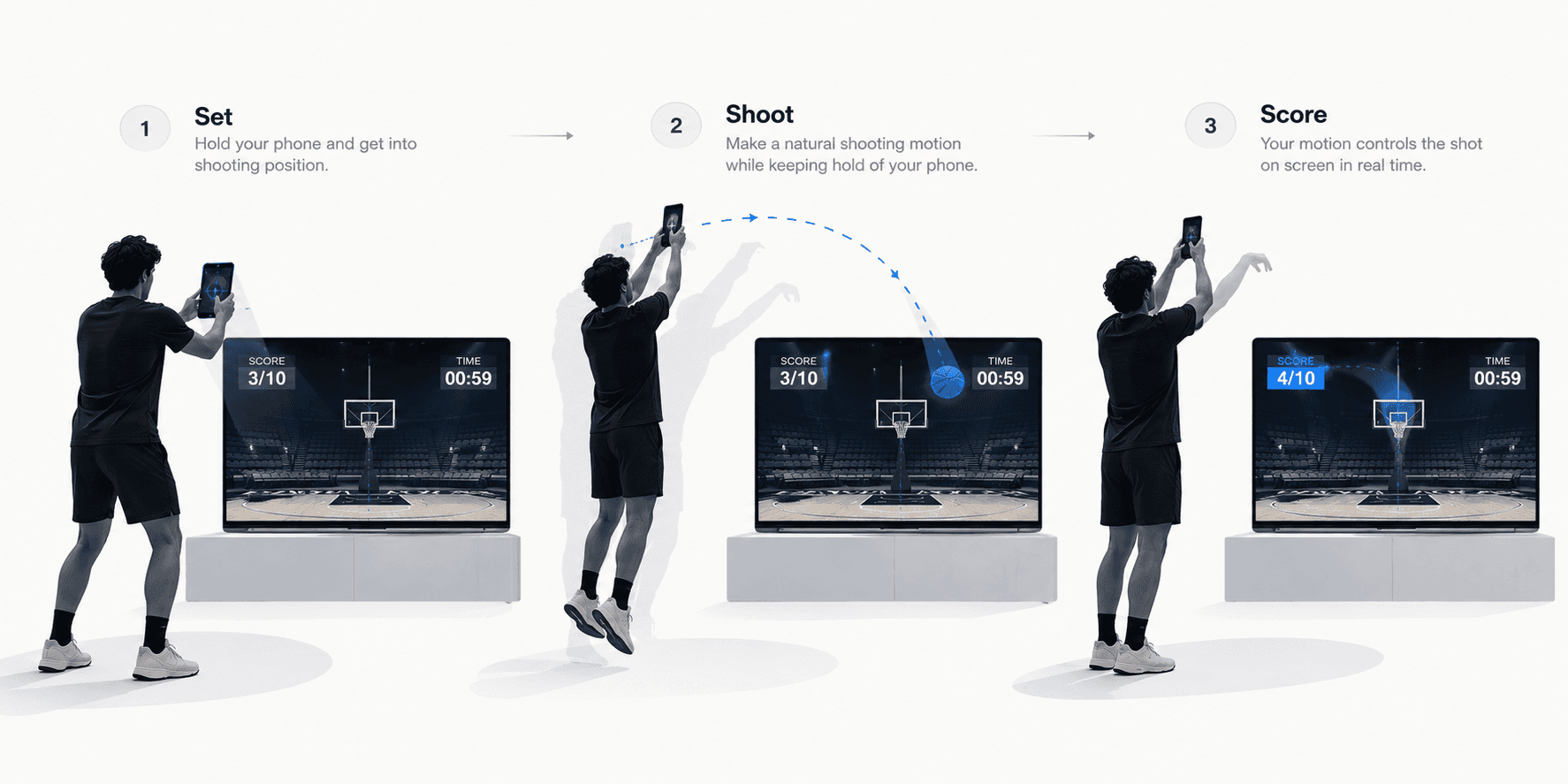
The phone became the ball. Players paired it with the desktop game, held it like a basketball with a finger on the screen, and went through a real shooting motion. Lifting the finger released the shot, so the phone never left their hand.
The game used the phone's gyroscope to read motion, speed, and velocity, and treated tilt and twist as aim, so the ball's direction followed how the player actually held and moved. A power meter tutorial with practice shots taught the timing before the clock started. Two ways to play: a solo timed free throw challenge, or challenge a friend to a game of Around the World.
The Outcome
The game went viral at launch, drawing heavy social media hype and an honorable mention from ESPN, along with coverage from several other news outlets.
It turned hardware already in every player's pocket into a controller, and a marketing push into something fans actively played and shared.
EA Sports
About This Project
NBA Live had been on shelves for a while and needed a reason for fans to talk about it again. We built a free throw side game that paired a desktop screen with the player's phone, turning the phone into the basketball. Players shot with a real arm motion, and the game read the throw through the phone's gyroscope. It went viral, with an honorable mention from ESPN.
The Challenge
NBA Live had been out for a while, and marketing needed to build fresh hype around it. A trailer or promo page wasn't going to do it.
The idea had to be something people would play, share, and challenge friends on, and it had to work from a browser with the device already in their pocket.
The Approach
I led UX alongside a producer and two engineers, in close collaboration with the marketing and PR teams.
The phone became the ball. Players paired it with the desktop game, held it like a basketball with a finger on the screen, and went through a real shooting motion. Lifting the finger released the shot, so the phone never left their hand.
The game used the phone's gyroscope to read motion, speed, and velocity, and treated tilt and twist as aim, so the ball's direction followed how the player actually held and moved. A power meter tutorial with practice shots taught the timing before the clock started. Two ways to play: a solo timed free throw challenge, or challenge a friend to a game of Around the World.
The Outcome
The game went viral at launch, drawing heavy social media hype and an honorable mention from ESPN, along with coverage from several other news outlets.
It turned hardware already in every player's pocket into a controller, and a marketing push into something fans actively played and shared.
EA Sports
About This Project
NBA Live had been on shelves for a while and needed a reason for fans to talk about it again. We built a free throw side game that paired a desktop screen with the player's phone, turning the phone into the basketball. Players shot with a real arm motion, and the game read the throw through the phone's gyroscope. It went viral, with an honorable mention from ESPN.
The Challenge
NBA Live had been out for a while, and marketing needed to build fresh hype around it. A trailer or promo page wasn't going to do it.
The idea had to be something people would play, share, and challenge friends on, and it had to work from a browser with the device already in their pocket.
The Approach
I led UX alongside a producer and two engineers, in close collaboration with the marketing and PR teams.
The phone became the ball. Players paired it with the desktop game, held it like a basketball with a finger on the screen, and went through a real shooting motion. Lifting the finger released the shot, so the phone never left their hand.
The game used the phone's gyroscope to read motion, speed, and velocity, and treated tilt and twist as aim, so the ball's direction followed how the player actually held and moved. A power meter tutorial with practice shots taught the timing before the clock started. Two ways to play: a solo timed free throw challenge, or challenge a friend to a game of Around the World.
The Outcome
The game went viral at launch, drawing heavy social media hype and an honorable mention from ESPN, along with coverage from several other news outlets.
It turned hardware already in every player's pocket into a controller, and a marketing push into something fans actively played and shared.
EA Sports
About This Project
NBA Live had been on shelves for a while and needed a reason for fans to talk about it again. We built a free throw side game that paired a desktop screen with the player's phone, turning the phone into the basketball. Players shot with a real arm motion, and the game read the throw through the phone's gyroscope. It went viral, with an honorable mention from ESPN.
The Challenge
NBA Live had been out for a while, and marketing needed to build fresh hype around it. A trailer or promo page wasn't going to do it.
The idea had to be something people would play, share, and challenge friends on, and it had to work from a browser with the device already in their pocket.
The Approach
I led UX alongside a producer and two engineers, in close collaboration with the marketing and PR teams.
The phone became the ball. Players paired it with the desktop game, held it like a basketball with a finger on the screen, and went through a real shooting motion. Lifting the finger released the shot, so the phone never left their hand.
The game used the phone's gyroscope to read motion, speed, and velocity, and treated tilt and twist as aim, so the ball's direction followed how the player actually held and moved. A power meter tutorial with practice shots taught the timing before the clock started. Two ways to play: a solo timed free throw challenge, or challenge a friend to a game of Around the World.
The Outcome
The game went viral at launch, drawing heavy social media hype and an honorable mention from ESPN, along with coverage from several other news outlets.
It turned hardware already in every player's pocket into a controller, and a marketing push into something fans actively played and shared.